
Turning Experience into Impact: One Patient’s Commitment to the PCD Community
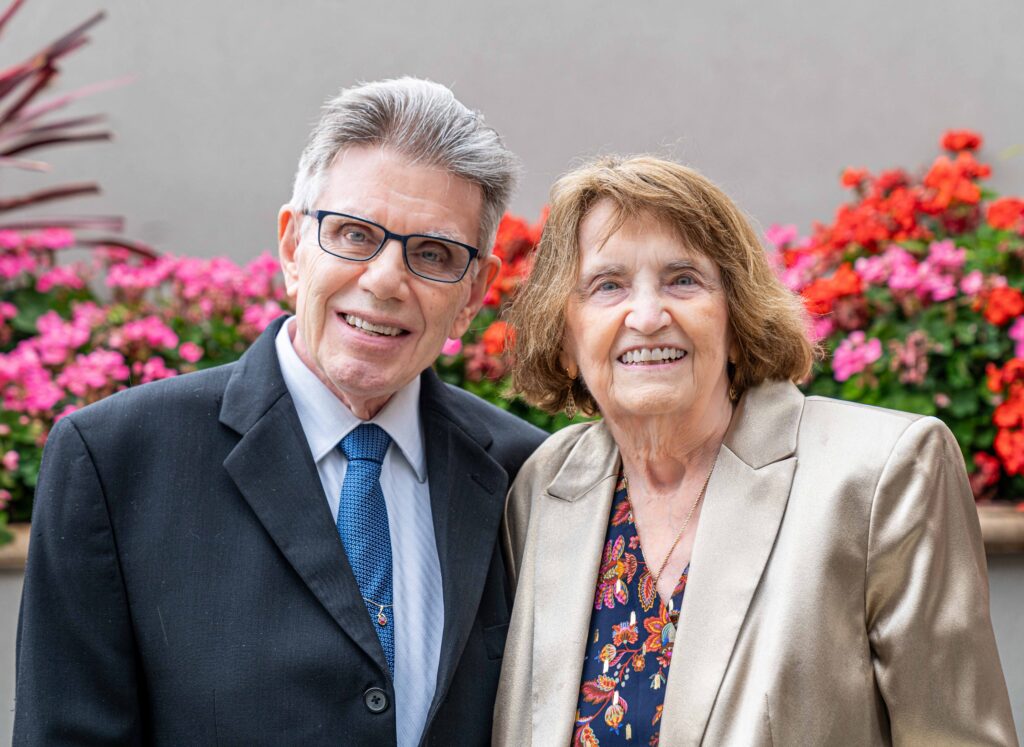
Cheryl Young and Tom Sebo. Credit: Rick Maness.
A PCD patient who was not diagnosed until age 60, Cheryl Young has navigated decades of uncertainty while building a full career, serving her community, and traveling the world. Her story underscores the power of knowledge, patient connection, and research participation—and shows how lived experience can help create a better future for the PCD community.
Can you share a little about your PCD journey to set the stage—when and how you were diagnosed, and what living with PCD has been like?
When I was born in 1948, PCD as we now know it had not been identified, and my hearing difficulties were attributed to allergies. At 11, I had my first surgery for bronchiectasis and tested negative for cystic fibrosis. At 18, I moved to Arizona for college, hoping a warmer climate would reduce my infections. I continued allergy shots until 1978, when I moved to California and a new allergist determined that I did not have allergies. After several sinus and ear surgeries, I received my first nebulizer at 35 and began inhaled steroids at 45. At 60, when genetic testing for PCD became available, I tested positive. In 2019, I experienced massive hemoptysis while vacationing in Europe. After embolization, I finally established care with a pulmonologist and began using modern airway-clearance techniques.
In spite of all this, I have had a full life: a 35-year career, extensive volunteer work, and 20 years supporting a performing arts organization in retirement. My husband, Tom, and I decided not to have children because I always suspected I had a genetic condition. Together, we also placed and supervised 90 international exchange students and traveled the world for 25 years.
What inspired you to attend the PCD Foundation’s first Global Conference in Montreal, and what did you hope to gain from the experience?
I attended the first Global Conference on PCD in Montreal this summer to thank the researchers. Instead, I discovered an overwhelming amount of work by thousands of people around the world who have devoted their lives to our rare disease. The conference featured about 40 formal presentations and 100 poster sessions spanning basic and applied research. I was especially surprised by the work underway in South America. The PCD community truly represents a United Nations of cooperation.
How did the conference change the way you think about the role patients and families can play?
I was blown away by how many patients attended and how strongly they wanted to be part of a community. One patient came all the way from Australia, and a teenage girl brought tears to my eyes when she said, “I’ve never met anyone with PCD before.” Having managed my condition largely on my own, I also came away with a deeper appreciation for the immense role parents play in keeping children with PCD stable while caring for their children without PCD.
After attending the conference, how do you feel inspired to stay involved?
I want to advocate for better information for adult patients and more ways for patients to connect and share what they have learned. I also want to understand other conditions that may be associated with PCD in adults—such as gastrointestinal, cardiovascular, or endocrine conditions—so we can anticipate and manage them if they occur. Finally, I want clearer guidance on where to find important new studies as they are published. I have been blessed to live well with PCD, and I want to do whatever I can to make life easier for newly diagnosed patients.
What message would you share with others to inspire them to get involved, support one another, or help advance progress for the PCD community?
Learn as much as you can about PCD and keep up with new developments. For those who use social media, PCDF Connect is a private Facebook group that offers credible information and opportunities to connect with other patients. The PCDF Connect Registry is a new, open-to-all registry from the PCD Foundation that connects any potential PCD patient with the Foundation to ensure information reaches you. Sign up here: https://www.pcdfoundation.org/pcdfconnect/
Subscribe to Running on Air, a monthly newsletter with research updates and information about supplemental oxygen. It also hosts several webinars each year in which researchers present highlights from relevant scientific conferences worldwide and allow ample time for questions.
Why have you decided to participate in PCD research?
As an older member of a rare-disease “club,” I am motivated to help future generations. I began participating in research during the pandemic through the University of Bern’s Living with PCD Study in Switzerland. I regularly check ClinicalTrials.gov, where in 2023 I found a University of North Carolina–Chapel Hill study on using home spirometry to monitor exacerbations. During a vacation in the area, I also visited UNC to participate in an ENT natural-history study because I had long noticed the lack of information about sinus and ear issues. I am enrolled in the PCDF Connect Registry and have already received my first invitation to participate in a study. Not all studies are drug trials; some are clinical research studies. I regret never receiving care at a PCD Clinical Center, where I could have enrolled in the Research Registry and contributed detailed data. The PCD Foundation’s Registry, along with registries worldwide, is essential to identifying enough patients for research. And I realize that patients who receive care at a Clinical Center receive the most comprehensive and timely instructions on how to manage their condition, which I missed by going to doctors who didn’t know a lot about PCD.